


Implant Direct® Legacy Compatible Abutments: How Precision Machining Ensures Secure Implant-Prosthetic Fit
Dr. Samuel Pacheco (DDS) | December 03, 2025
Implant Direct Legacy remains a trusted implant system for clinicians who value a stable internal hex connection and restorative flexibility. Because it is widely used across both clinics and laboratories, dental professionals often look for compatible abutments that offer the same precision and reliability as the original components.
For labs managing restorative workflows, the quality of compatible components is critical. Machining tolerances, material selection, and connection accuracy directly influence how securely an abutment seats and how predictably a restoration performs. This guide explains the importance of precision machining for Legacy-compatible abutments and how it contributes to long-term stability in implant-prosthetic cases.
Understanding the Legacy Internal Hex Design
The Implant Direct Legacy system uses a 2.5 mm internal hex connection that provides anti-rotational stability and proper engagement during torque application.
Key characteristics of this platform include:
- A deep internal hex for consistent seating
- Flat-to-flat surfaces that prevent rotation
- Stable shoulder positioning
- A screw joint designed to maintain preload long term
Labs using compatible components must rely on abutments that mirror this geometry accurately. High-quality options maintain the same engagement depth, hex geometry, and overall dimensional consistency required for predictable restorations. For those evaluating compatible components, reviewing a dedicated collection of Legacy internal hex restorative parts can help streamline case planning.
Why Precision Machining Matters
Machining quality is one of the most important factors affecting abutment performance. Even small variations at the micron level can compromise the stability of the implant-abutment connection.
What labs should look for:
Hex accuracy
A precisely machined hex seats firmly without rotation. A loose or inconsistent hex can lead to micro movement, screw fatigue, and long-term prosthetic complications.
Seating depth
If an abutment does not fully seat into the platform, the crown margin may not align correctly, and the screw may not preload as intended.
Thread and screw integrity
Screws must engage cleanly and match the mechanical requirements of Legacy implants. A well-machined screw reduces friction and maintains preload after torqueing.
Surface finishing
Smooth surfaces decrease friction during tightening and help ensure a tight, stable joint.
Precision machining ensures predictable fit, consistent torque, and optimal load distribution.
Material Quality for Long-Term Stability
High-quality Legacy-compatible abutments are typically made from Titanium Grade 5 (Ti-6Al-4V ELI). This alloy offers:
- High strength-to-weight ratio
- Excellent corrosion resistance
- Predictable mechanical behavior under load
- Proven biocompatibility
These qualities make Grade 5 titanium the preferred material for abutments that must withstand occlusal forces and long-term functional demands.
The Clinical Impact of Accurate Manufacturing
Precision manufacturing directly influences the mechanical stability and longevity of implant restorations.
Benefits include:
-
Stable torque retention that reduces screw loosening
-
Even distribution of occlusal forces across the internal hex interface
-
Predictable soft tissue adaptation due to accurate shoulder height
- Reliable CAD/CAM integration for digital workflows
Labs that work with multiple implant systems benefit from using compatible components that maintain these standards across every batch.
Choosing Compatible Components You Can Trust
When selecting compatible abutments, laboratories should look for suppliers that provide:
- Tight machining tolerances
- Titanium Grade 5 manufacturing
- CNC precision engineering
- ISO cleanroom packaging
- Batch traceability
- Consistent screw quality
With accurate engineering and reliable materials, compatible components can support restorations with the same predictability as premium brand parts.
Final Takeaway
Implant Direct Legacy compatible abutments offer labs and clinicians a reliable way to restore a popular implant system while maintaining high standards of precision and fit. When manufactured with meticulous machining and proper material selection, these components provide secure engagement, stable torque performance, and long-term restorative confidence.
For laboratories handling Legacy cases regularly, selecting precisely machined compatible components helps ensure consistent results and efficient restorative workflows.
References
- Binon PP. Implant-abutment mismatches and joint stability. Int J Prosthodont. 1996;9(4):333–343.
- Siamos G, Winkler S, Boberick KG. Screw loosening in implant dentistry. J Oral Implantol. 2002;28(2):67–73.
- Jörn D, Kohorst P, Besdo S, et al. Machining accuracy and implant-abutment stability. Clin Implant Dent Relat Res. 2014;16(2):302–311.

OEMDent.com offers uncompromised quality, cost-effective dental implants & prosthetics compatible with leading implant systems. We go beyond manufacturing, offering OEM & Private Label services to meet your dental needs.
Continue reading
View all-

-

MIS® Seven Compatible Abutments: What Labs Need to Know About Fit, Torque, and Connection Accuracy
Dr. Samuel Pacheco (DDS) |
-

-
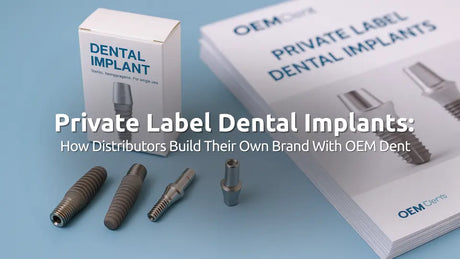
Private Label Dental Implants: How Distributors Build Their Own Brand With OEM Dent
Dr. Samuel Pacheco (DDS) |
-

Nobel Active® Compatible Implants: Balancing Precision and Affordability
Dr. Samuel Pacheco (DDS) |
-

From CAD Design to Clinical Reality: The Role of STL Files in Modern Implant Production
Dr. Samuel Pacheco (DDS) |
-
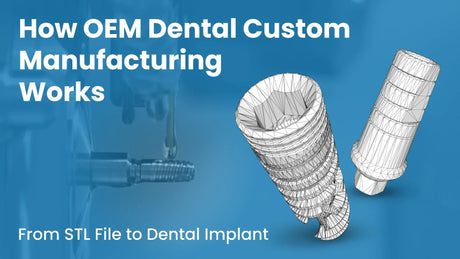
From STL to Implant: How OEM Dent Custom Manufacturing Works
Dr. Samuel Pacheco (DDS) |
-
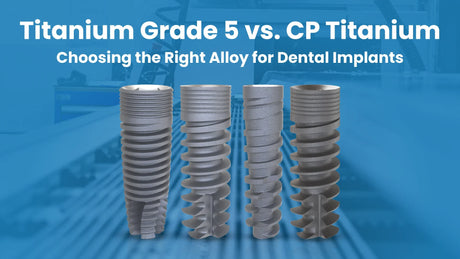
Titanium Grade 5 vs. CP Titanium: Choosing the Right Alloy for Implants
Dr. Samuel Pacheco (DDS) |


